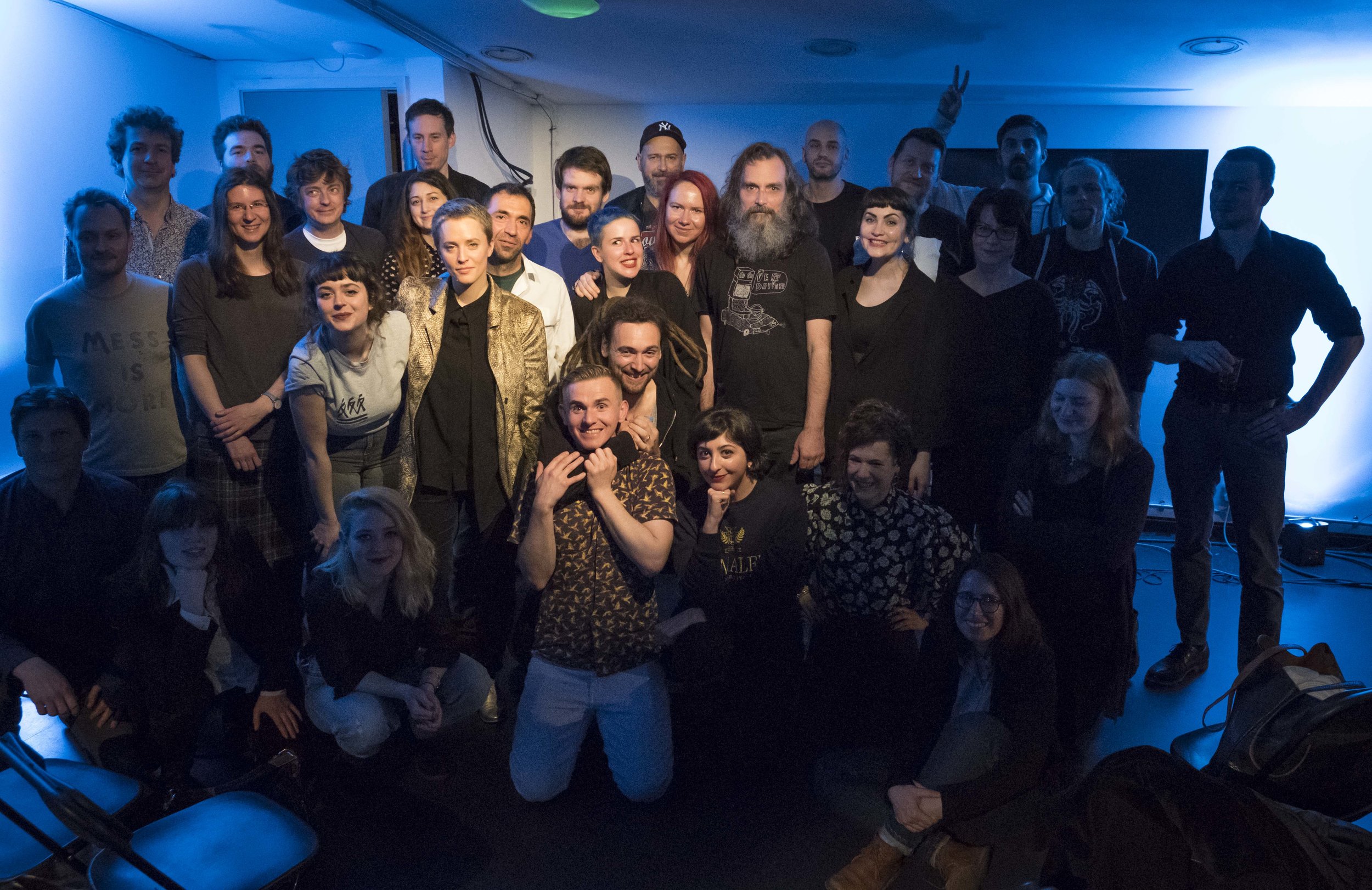
EPF2018 #9: Austrian focus at European Poetry Festival

20180412_232455.gif

I loved this event. A really strange and intense night, another packed house came to witness, in the salon of the Austrian Cultural Forum near Hyde Park, an event of solo readings and new collaborations. I owe the ACF so much. They were the first to really have faith in the events I put on, the risks I try to take, and their vouching for me has led to things like the European Poetry Festival itself. It was like coming home. And through them I have met so many brilliant contemporary Austrian poets and Robert Prosser, Max Hofler and Daniela Chana are three of the finest.

The opening salvoes from Ana Seferovic, Claudiu Komartin, Giovanna Coppola, Anastasia Mina et al set everyone back in their seats as one after the next the poets brought intense, powerful work. It was really a special atmosphere. Then Robert and I kind of muddied the water before Daniela and Phoebe Power and Max and Iris Colomb finished the night perfectly. I hope every year I get to do a European Poetry Festival we have an Austrian focus event, their scene is really one of the best on the continent. www.europeanpoetryfestival.com/austria

EPF2018 #8: Versopolis at London Bookfair for European Poetry Festival

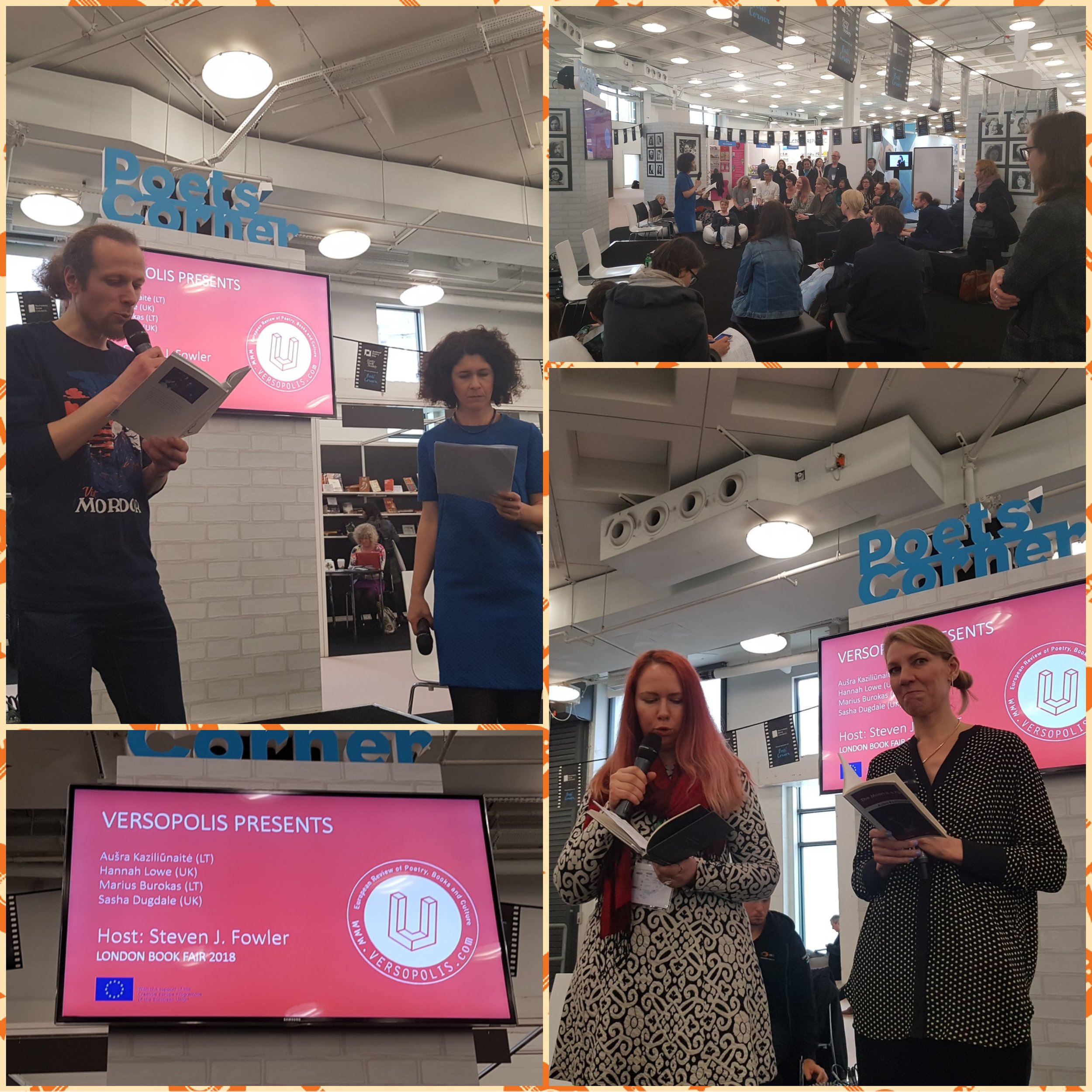
Entering the belly of the beast I had the pleasure to put together an event for Versopolis, a huge EU funded cross continental poetry platform, as one of the editors of their European Review of Books, Poetry and Culture. At the back of the massive Kensington Olympia, in the subsidy section, the poetry pavilion corner, I introduced Versopolis poets Marius Burokas, Hannah Lowe, Ausra Kaziliunaite and Sasha Dugdale – all writers I’ve worked with before. All poets I admire. A slightly dodgy sound scenario was overcome with notable readings, which forced close attention, and we finished the event with a quick discussion, which was quite insightful and starkly honest. Versopolis also produced a great little publication for the event. Anja Kovac was a great producer to work with too, the whole thing was smooth and it was fortunate to be able to bring the festival inside the bookfair.  www.europeanpoetryfestival.com/versopolis

20180410_181210.jpg

EPF2018 #7: Collaborating with Ausra Kazilunaite

Ausra Kaziliunaite is a really remarkable poet. I had the pleasure of meeting her last year, for the 2017 European Poetry Night, and when we had an unfortunate / understandable last minute collaborative dropout her and we put something together in a day I am proper proud of. Ausra sent me her poem written for the night, a piercing, elusive, allusive poem about England leaving Europe and I responded, literally following her words (which she wrote in English) and making small nudges in tone and order. It really came together in the reading, and it served to remind me despite my forays into performance that a reading, when done well, can keep attention with effect. I hope we get to work again in the future, the work she is doing in Lithuania is really important and she is a perfect example of the kind of person I feel lucky to work with in these collaborative poems

DSCF6263_1.jpg

EPF2018 #6: Lithuanian focus at European Poetry Festival

To have people queueing down the stairs of the poetry café, the poetry society’s home in London, was gratifying, and a packed house was the right vibe within which to celebrate three brilliant Lithuanian poets who had come to London as part of the London Bookfair Baltic celebration. The Lithuanian Cultural Institute were so supportive of the fest in general and this was a really memorable night, pleasing for me to deliver an event that really gave the poets a proper platform to show their works. We had some solo readings from a mix of visiting poets and European poets living in the UK (this blend integral to the festival’s remit) including Muanis Sinanovic from Ljubljana and Theodoros Chiotis from Athens, before new collaborations were presented by poets I had met teaching for the Poetry School on courses, both in person and online, about contemporary European poetry. They did me proud, and produced some remarkable live works. The night was finished with three new collaborations involving the Lithuanian poets and then everyone decamped to a covent garden pub. It was a really atmospheric night, the best I’ve ever put on in that venue.

See videos of every performance on the night and pictures too at www.europeanpoetryfestival.com/lithuania

EPF2018 #5: European Poetry Festival celebrates Sound & Performance at Iklectic Artlab

20180408_223006.jpg

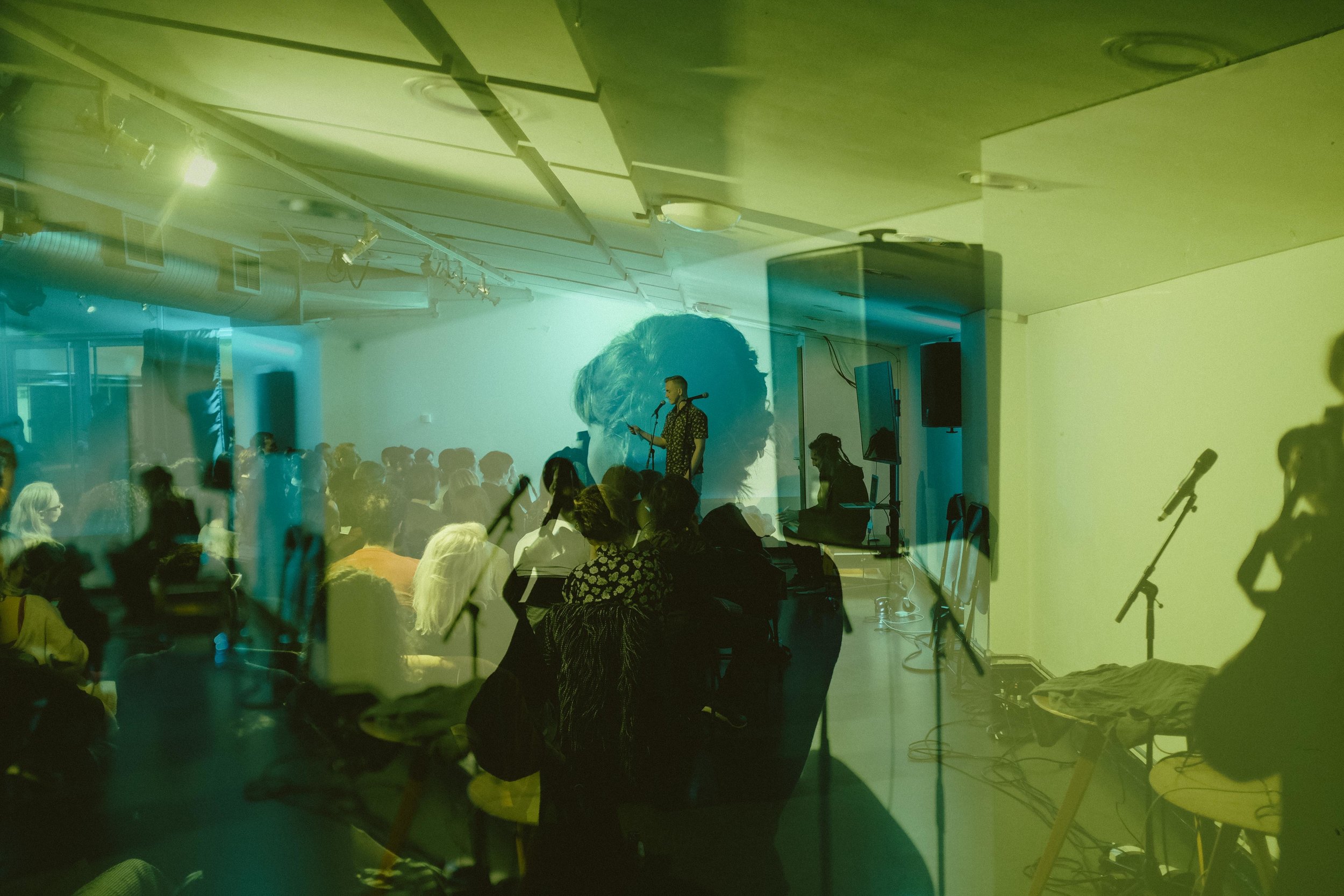
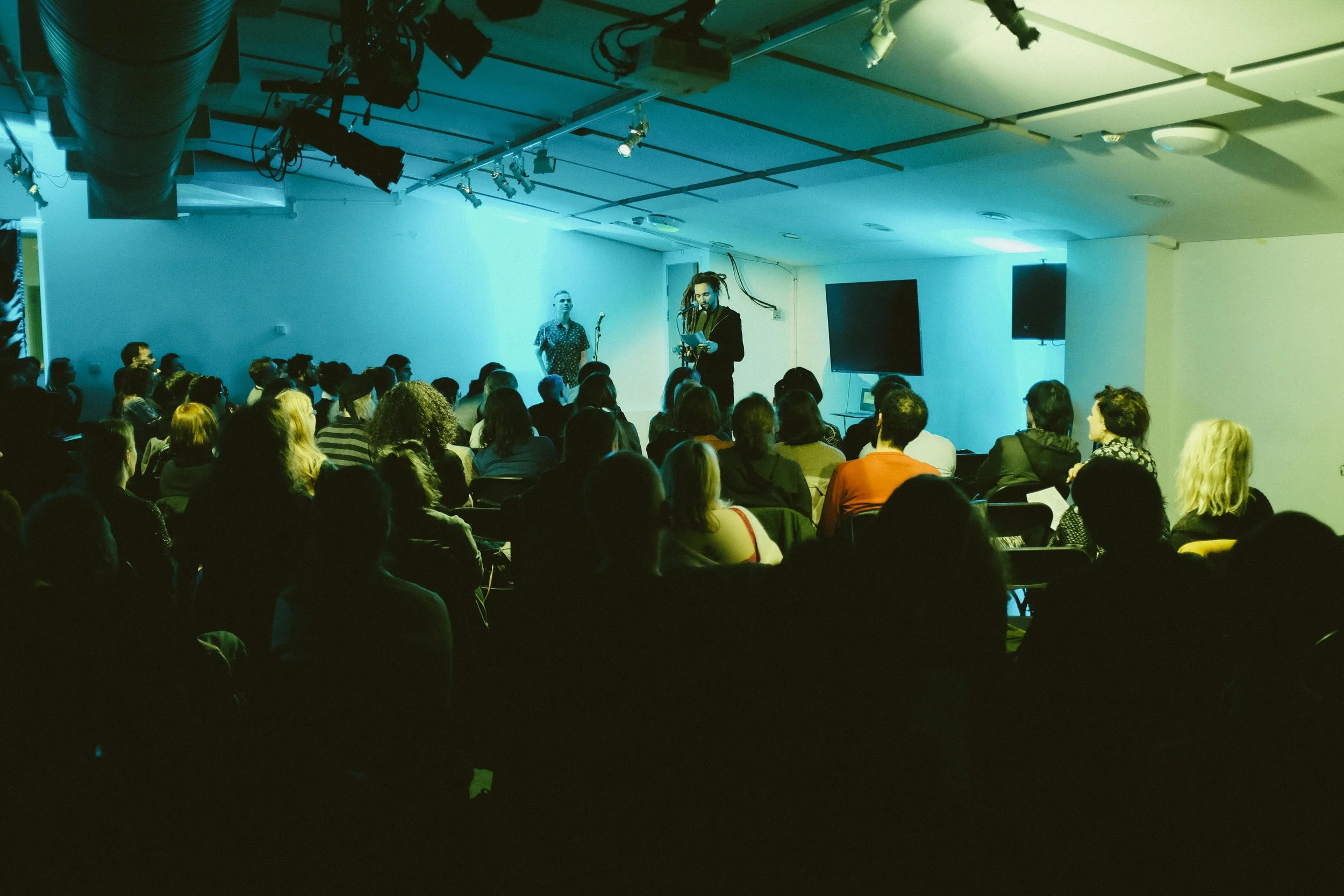
An extraordinary venue and a grand night of innovative live poetry, from the sonic to the electronic to the vocal to the conceptual. Eduard and the team (including Tony the Cat) at IKLECTIK are doing an amazing job and were so hospitable, we really felt like we were in someone’s beautiful living room. The place was nicely full, a good 70 people sat in to watch a real range of works. It was the first time I got to put on poets I’ve admired for years like Rike Scheffler from Berlin, Sergej Timofejev from Riga, and it was great to have back on in London poets like Robert Prosser from Vienna and Kinga Toth from Budapest. Range was the key element here, again, and the works complimented each other. It was a little nubache for me to run all the tech from my laptop while also filming but worth it, this movement of poets across Europe worrying about liveness and sound and time needed to be acknowledged in its own space and place.

See videos of every performance on the night and pictures too at www.europeanpoetryfestival.com/performance

EPF2018 #3: Collaborating with Max Hofler

I’ve known Max for a few years now. He is one of the poets I point people towards when I speak of my own collaborative practise being a form of autodidactic pedagogy. I saw him work, live, and realised his poetry was a permission. I too could work in the pocket, improvising around concepts which are complex and paradoxical but boil down to a dark awkward humour, which skewers pretension in poetry, which is too often pretentious due to a lack of self-awareness or self-righteousness which seems increasingly ripe. 

I always try and present collaborations at my own event which are satirical, to offset the perception of my hand in the shaping of the event, or to ironise the role of the host / curator. In this case I suggested to Max we do something around awards and poetry award culture. We worked up a loose structure and then improvised the rest. People believed more of it than I would’ve thought likely.

The poem I wrote, which I suggested was Max’s most famous poem, translated, was written that afternoon, on a scrap of paper, scanned here, when myself and all the poets met during the day for lunch and rehearsals.

It was written in response to conversation from the night before and is dedicated to Frederic Forte, whose rainbows are poetry and whose poetry are rainbows. 

EPF2018 #2: The behemoth : European Camarade

DSCF6117.jpg

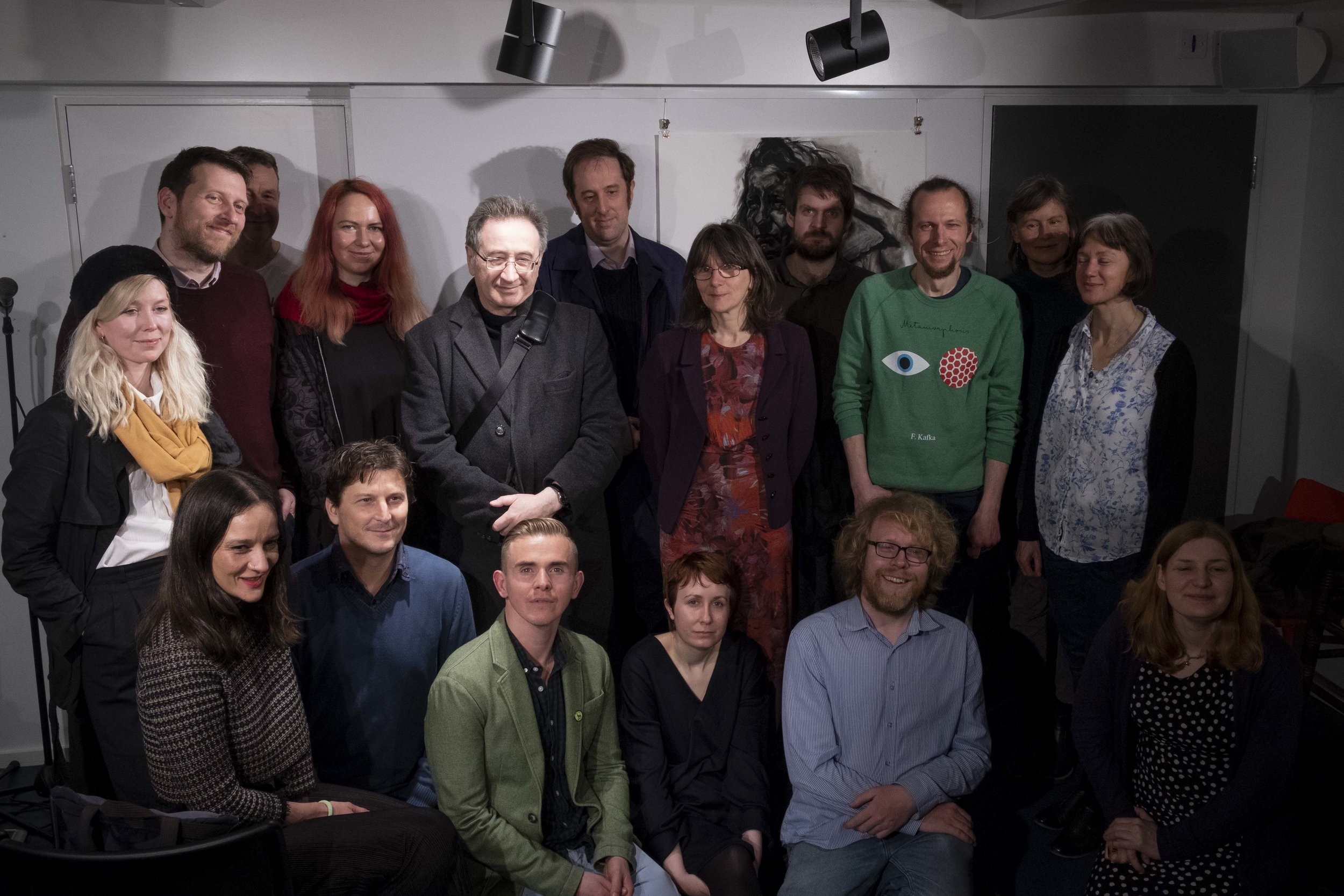
Maybe the biggest event I’ve put on in London. Over 170 people came to watch 16 brand new collaborative poetry commissions from 32 poets visiting from over 20 countries. More than that it was a remarkable atmosphere of experimentation and humour, welcoming, engaging while maintaining the literary / avant-garde aesthetic that interest me personally as an reader / watcher and I think are increasingly necessary.

So many of the pairings seemed cohesive, the hours I’d spent pairing people very carefully, on an instinctually blend of their work and personalities bearing fruit and I think (and was told) beginning some proper friendships. This is the invisible and satisfying consequence of such a massive endeavour, so full of energy – it is a literal invocation of community against the solitary insistence of poetry culture which lags, still in 2018, behind other arts. This was a giant proof of concept for collaborative events.. To have people from so many cultural and linguistic backgrounds, like London itself, and such a range of ages and styles too, and to have these differences, like the works on show, be complimentary and uplifting for the performances that came before and followed after, this is my goal in all this. 

See videos of every performance on the night and pictures too at www.europeanpoetryfestival.com/camarade

DSCF5851.JPG
DSCF5904.JPG

EPF2018 #1: European Poetry Festival 2018 begins at Writers Centre Kingston

The start of my first foray into festival directing ended my first foray into Writers’ Centre directing, whatever either of those things mean. In practical terms it began a remarkable 10 days for me, the most satisfying curatorial / organisational patch of my life. For this event, held in a slightly blanched upstairs room in the otherwise lovely Rose Theatre in Kingston, near the Uni I teach within, I was able to bring together around a dozen poets, some visiting, some local, some students. Old friends like Dublin’s Christodoulos Makris and Venice’s Alessandro Burbank read alongside soon-to-be-new-friends like Paris’ Frederic Forte and Amsterdam’s Erik Linder. I was particularly proud of the young poets I’ve had the pleasure to work with in my teaching like Olga Kolesnikova and Synne Johnsson, and the performances ranged from translated readings to performances, Fred Forte and Astra Papachristodoulou both presenting particularly entrancing conceptual live poetries. Everyone piled into the olde market square afterwards, talking late into the night.

See videos of every performance on the night and pictures too at www.europeanpoetryfestival.com/kingston
www.writerscentrekingston.com/europe

A note on: European Poetry Now, teaching at the Poetry School

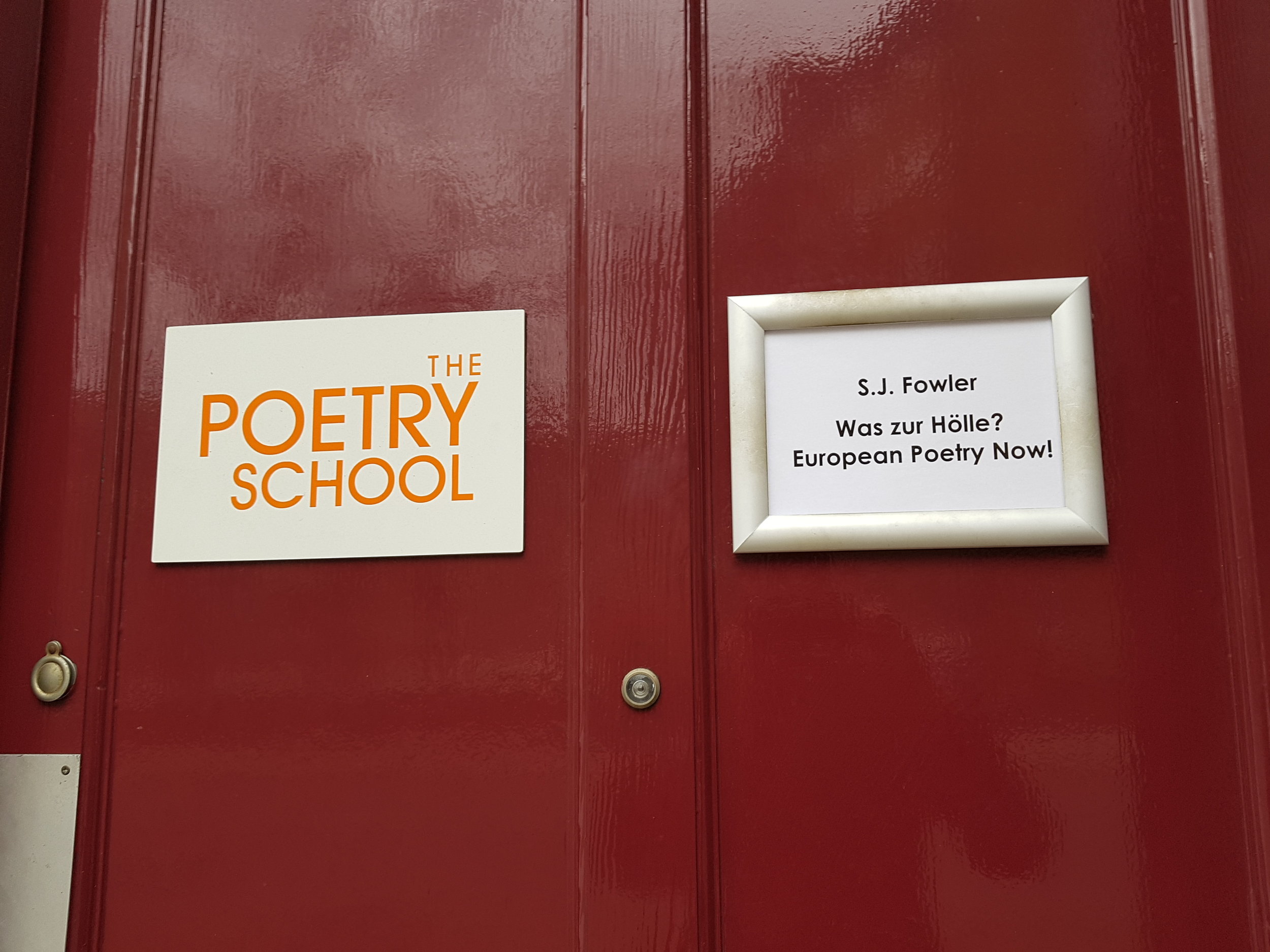
Lambeth Walk is synonymous for me with the Poetry School. The city is a massive patchwork of associations, splicing my own experiences against the ground. I feel part of something larger in London, in small patterns, of walking, visiting places for a purpose. Getting the Bakerloo line to Lambeth North, walking down to the Poetry School, where I started teaching in early 2014, and where I really developed the teaching techniques I tend to use now, and where I met lots of poets whom are now friends, is a really positive memory. I learned so much in that building, that row of buildings. The Poetry School is about to move on, as all things must, but I was really pleased I managed to do one last course in the old building before I've no real reason, for now, to visit Lambeth Walk. It was as good as anything I've done for the PS, a weekend exploring contemporary European Poetry, that I ran alongside on online course, on the same subject, with poets from across the globe.

I woke up very early on both weekends days, in the snow, the tubes quieter than normal, and was joined by a dozen really brilliant, positive minded poets. They couldn't have been more engaged and enthusiastic, it was just one of those experiences where the human mix makes it resoundingly positive. I shared some poetry I've never taught before, most especially around the notion of a new european lyric tradition, with poets like Max Czollek, Ann Cotten, Tomica Bajsic and many others I've been lucky enough to meet. This complimented explorations of sound, visuality, materiality, performance, new surrealism and pretty essential ideas that drive a lot of european poetry. Some of the participants will read on an upcoming European Poetry Festival event and it seems already that the contact with others that really motivates me to do these courses has begun once more, anew, thanks to what the poetry school does. www.stevenjfowler.com/poetryschool

Addendum, added April 12th 2018 - here are four of the participants on the course performing as part of the European Poetry Festival - Lithuania

Published : 90 world poets for 90 years Croatian PEN anthology

Very happy to have a poem in a new anthology published by Croatia's branch of PEN.

90 poets for 90 years of Croatian PEN, with works by artists Snjezana Ban, Tanja Skrgatic, Miriam Younis by Editors: Tomica Bajsić, Miroslav Kirin, Damir Šodan

VIDIPoezija_Naslovna_WebPrint.jpg

Poets: Don Paterson, Ron Padgett, Sandeep Parmar, Brian Turner, TJ Dema, Dominik Dombrowski, Jarkko Tontti, Anton García, Rita Dahl, Luljeta Lleshanaku, Valzhyna Mort, Kristin Dimitrova, Ilya Kaminsky, Patrick Cotter, James Byrne, Kim Addonizio, Sandra Cisneros, Martín Espada, Sinéad Morrissey, Milena Ercolani, Jacques Brel, Adam Zagajewski, Eugenijus Ališanka, Wolf Wondratschek, Yu Jian, Jack Mapanje, Joan Batchelor, Josif Brodski, Márcia Theóphilo, Liu Xiaobo, Liu Xia, Anne Carson, Bei Dao, Mahmoud Darwish, Pier Paolo Pasolini, Raúl Zurita, José Emilio Pacheco, Najwan Darvish, Tishani Doshi, Xu Hudong, Gabeba Baderoon, Melissa Fry Beasley, Marco Fazzini, Maria Barnas, Tibor Weiner Sennyey, Nathalie Handal, Zbigniew Herbert, Tehila Hakimi, Cláudia Sampaio, Andreia C. Faria, Blanca Wiethüchter, Claribel Alegria, Leonard Cohen, Chiqui Viscoso, Alejandra Pizarnick, Alfonsina Storni, Ernesto Cardenal, Francesca Cricelli, Liesbeth Eugelink, Majlinda Bashllari, Claudia Gabler, Roberto Bolaño, Eugeniusz Kasjanowicz, Easterine Kire, Chenjerai Hove, Moira McAuliffe, George Mario Angel Quintero, Aurélia Lassaque, Rafael Alberti, Roque Dalton, Juan Gelman, Márcia Theóphilo, Shi Tao, Julio Cortázar, Eunice Odio, Manuel Bandeira, Vinicíus de Moraes, Ashraf Fayadh, Kätlin Kaldmaa, Shachar-Mario Mordechai, Yolanda Castaño, Yu Jian, Hans Till, Lim, SJ Fowler, Estevo Creus, Ali Cobby Eckermann, Ostap Slyvynsky, Ming Di, Billy Collins.

My new poetry collection - The Wrestlers - due out this summer

I'm happy to say my next poetry collection will be out with Kingston University Press this summer. The Wrestlers brings together poems written over the last five years but finds it origin in a commission I was lucky enough to do for Tate Britain online, thanks to Sarah Victoria Turner - a suite of poems responding to Henri Gaudier-Brzeska's eponymous relief and the nine consequent copies.

In a sense these poems, when I wrote them in 2011 and 2012 were a pivotal moment in my writing, a rejection / acceptance of Poundian modernism. Moreover they were about wrestling itself, something that was the primary activity of my childhood and teenage life, as well as the relief, and written upon request, that felt / feel strangely autobiographical (though you wouldn't be able to tell that by reading them).

I've revised these and then added many other works where wrestling has become an action verb in the mechanics of the poems, often just in the title. In a sense wrestling becomes a concept of imposition that acts like a dialectic between ideas or opinions. 

Like my last book, The Guide to Being Bear Aware, I think The Wrestlers is pretty traditionally poetry, its literary, because like my last book, it has come into existence while, organically, I have found other mediums to be the place of my experiments, like in art books, theatre or performance. So my natural instincts have changed too, in poetry, something I'm glad about, to always be changing tastes. If it was those European poets of the post-war new lyric tradition looming over me for my last book, now I'd say it has been a revisitations to pre-war poets which have influenced me. Mallarme, Mayakovsky, Apollinaire, Wat, Cummings have become ghosts in my new book, a bit. Reading them again, seriously, for a second or third time has of course disturbed some bones in my own work.

The book will have a London launch on June 30th at Rich Mix with other readings to follow.

Poems in the collection have been previously published, in one form or another, by Gorse Magazine, Test Centre magazine, 3am magazine, The Wolf, Poems in Which, The Honest Ulsterman, The Bohemyth, Wazogate and the anthologies The Long White Thread: poems for John Berger (Smokestack Books), The Other Room 4, Millets (Zeno Press), Dear World and Everything In It (Bloodaxe Books), Hwaet: Ledbury Poetry Festival (Bloodaxe Books) and Shifting Ground (J&L Gibbons). It also features the suite Poems in which César Abraham Vallejo Mendoza wrestles Ricardo Eliécer Neftalí Reyes Basoalto (Pablo Neruda) which was commissioned by The Hay Festival : Arequipa, Peru in 2016 and a number of the poems in were created as part of The Green Infrastructure – a residency with landscape architects J&L Gibbons.

A note on: Poem Brut at Writers' Centre Kingston

20180322_214949.jpg

One of the things about curating an event is that you are fundamentally responsible for where it takes place. So when you arrive at a venue and it's locked and dark and down an alleyway next to the Thames off Kingston's market square, and it remains so for an hour, right up until people start arriving, you are aware that it might irk those who have made the effort to come out on a thursday night. That being said, as the event was a Poem Brut performance, it did seem to some that it was a deliberate act on my part, a conceptual investigation of what a literary event is. Some thought I planned it so performances would happen in the dark, in the cold, by the river. They were thrown when I walked the entire audience across the town like a grumpy pied piper to a new venue I had rustled up on the spot. To the endless credit of the audience, it seemed to do something positive to the proceedings, bonding people, creating a peripatetic unity. The performances that followed were brilliant, five new works in the poem brut style - challenging and inventing upon the possibilities of literature made live. Ink spitting, dog translations, mannequin pinning and canvas shredding. The poem brut events I have been running have restored my excitement for curating events, which I perhaps do too often, and it was grand to bring this energy to Kingston Uni for the Writers' Centre and the students. I'll do it again for the next year of events, as I realised, as the night unfolded in a rather clinical lecture theatre, that Iris Colomb gobbing ink onto a page and then reading it was perhaps the exact antidote to the lectures that had left there trace in the room. All the videos www.writerscentrekingston.com/poembrut

A note on: Museum of Futures: Scribbling & Scrawling exhibition ends

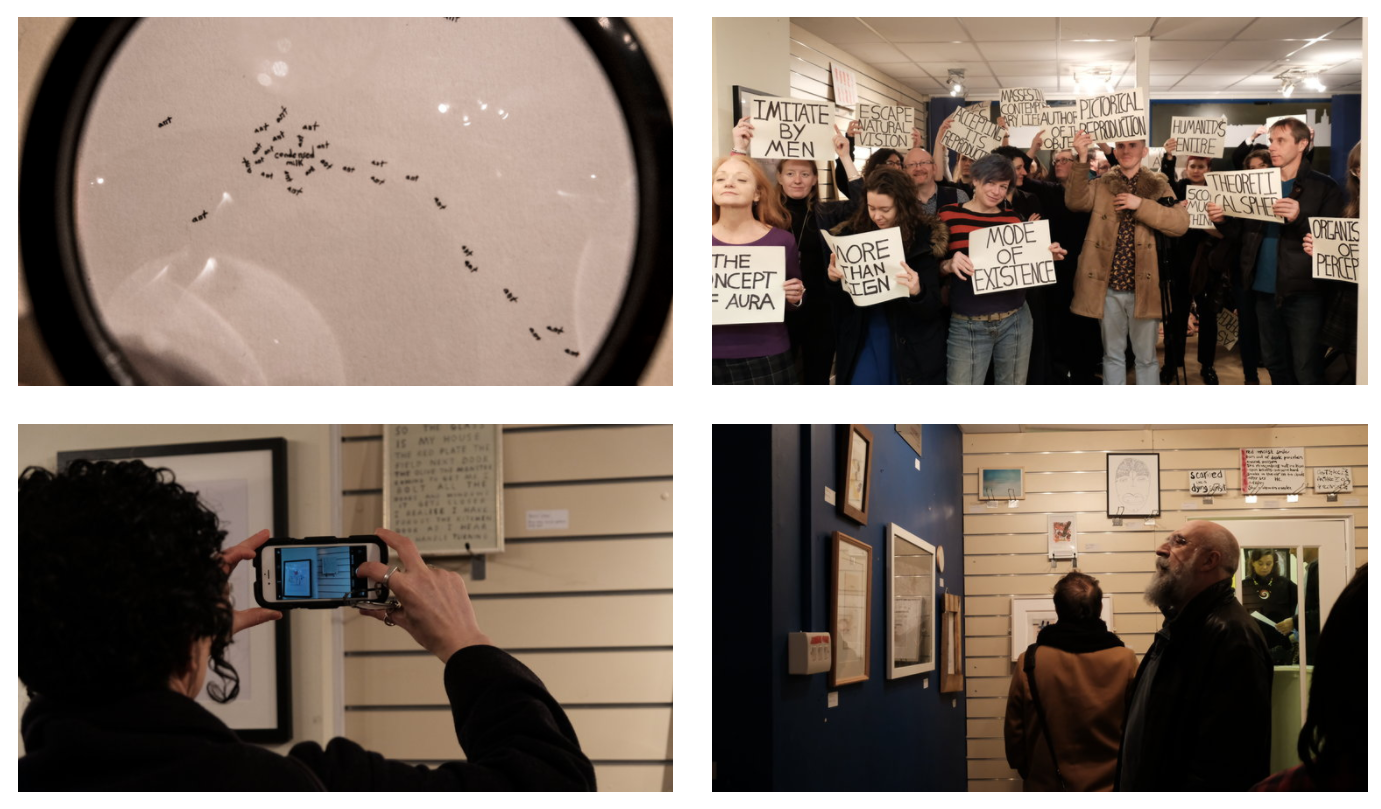
Another magic engagement with Surbiton's Museum of Futures, a unique community gallery that I've been able to work with through Writers' Centre Kingston and Kingston University. Students, local artists and writers, and those able to travel to the gallery nearby contributed to a brilliant month long exhibition of writing art, aligned with my poem brut project, on the theme of scribbling and scrawling. The work was uniformly good and once more, by taking on the labour of an open submission process, I had the chance to meet a load of talented new people, from Nicole Polonsky to Denise McCullough, there was some real discoveries for me. Moreover my students had the chance to see their work walled for the first time, and help me, significantly, in the curation of the show and it's events.

www.writerscentrekingston.com/futures lots more about the exhibition on the site, as well as the launch event here www.writerscentrekingston.com/making

A note on: performing for Club Alpbach at the Austrian Embassy

A more beautiful setting i have never performed within. The performance I was asked to present was in response to a set of carefully crafted questions that discussed the nature, and the future, of Europe, as a political project, and what it means to be European. This was an invitation from Club Alpbach http://www.clubalpbachlondon.eu/ who "want to create a space for a better Europe - Club Alpbach London hosts participatory events with leading changemakers from all sectors and awards scholarships to young people to attend the European Forum Alpbach, both in the spirit to address the most relevant social and political questions of our time." Hmmm a strange place for me to be, the fact that it was in a gorgeous victorian embassy was the least of it. Rather the feeling of it being political, professionally so, was fascinating. Either extraordinary fit and attractive young people, who looked like that had been engineered for a future europe, or elderly people scowling at me, or going on. There were canapes and dresses and I felt an imposter. The young all studied PPE or were art student friends of those studying PPE. It was all curiosly intense.

FotoJet (8).jpg

The quite brilliant young curator Josef Huber had quite clearly invited me and my performance counterpart Daria Blum so that we would put the cat amongst the pigeons. Daria performed at eurobitch and so the freshness of any real shock was gone when I followed her. I did the second of what Im calling Powerpoint Performances, which are 70% improvised, so frightening, but also effective, if they go well. I poured through slides I had written on the day essentially satirising the philosophical fallacies beneath such open questions about europe and european identity, not being fair in a way, but perhaps too being quite satirical and cutting. Enough that people felt cut, at times. I got a few laughs, which Im not sure is good or bad, but clearly left an impression, even if it was one mediated by my britishness, though I did mention brexit relentlessly. This was followed by a Q&A which meandered and perhaps evidenced my initial response to the lofty ambitions of the event itself. But better it happened than did not, and once more my stupid performances allowed me entrance into a world that would've been forever closed to me.

A note on : May 11th at Burley Fisher books with Toby Litt

3TZuJuOt_400x400.jpg

Part of a new series of events I'll be doing around a new book I have out this year, this May 11th I'll be speaking at Burley Fisher books for the first time, talking about wrestling, and celebrating the release of Toby Litt's memoir Wrestliana

http://burleyfisherbooks.com/event/wrestliana-toby-litt-in-conversation-with-steven-j-fowler/

"Using the nineteenth century as a guide, Wrestliana asks vital questions about modern-day masculinity, competition, and success. It is a beautiful portrait of two men and their different worlds, full of surprises and sympathy, and a wonderful evocation of a lost place and time." https://www.galleybeggar.co.uk/shop-1/wrestliana

Published: Philip Venables' Below the Belt

NMC-D238-Venables.jpg

Delighted to have my poetry featured on the debut album from composer Philip Venables. Phil and I worked on a piece for the London Sinfonietta's blue touch paper scheme some years back, it explored boxing and fistic percussion, entitled The Revenge of Miguel Cotto. 

You can listen to five excerpts from our collaboration https://www.nmcrec.co.uk/recording/below-belt

Phil has created some remarkable work since we worked together so it's grand to revisit this project through this CD and I'm really pleased it has a second life forevery on disc http://philipvenables.com/2018/02/06/below-the-belt/

A note on : Poem Brut reviewed on Tentacular Magazine

Lovely to have this write up of my poem brut project appear on Tentacular Magazine, recounting some of the issues of the series on 3am magazine https://www.tentacularmag.com/elsewhere-blog/brut

The sparkling Poem Brut

Poem Brut is a colourful and stimulating celebration of what lies at the intersection of the poetic page and the artwork.  Curated by SJ Fowler, it’s a series of events, exhibitions, and publications – but here I’ll focus on some of the 29 works (so far) represented online in 3am magazine. 

tentacular.jpg

What’s impressive is the reach of the community that Fowler has assembled and is playing an important part in creating, from Tallinn to Toronto and Trinidad.  Trinidad is the source of Andre Bagoo’s compelling ‘Scarlet Ibis’, where the placing of bright red rectangles over what we might assume to be lines of experimental text seems such a simple act, but invests the page with an animate quality, a jauntiness and inscrutability that may or may not be features of Trinidad and Tobago’s national bird. The work compels a kind of double longing, both for the text beneath, and for the identity and energy of pure colour, in what may also be a metaphor for (resistance to) the blood and erasure of a colonial past.........."

A note on: Poem Brut at Rich Mix III was a powerful night

20180317_220716.jpg

The third poem brut event I've held at Rich Mix continues the project's momentum, and in so doing, keeps restoring my faith in the concept which motivates these live happenings - that is, if we concern ourselves with the actual material of live performance, time / space / aliveness / physical presence etc..., what possibilities are there for the poem to become itself, and not some hackneyed, overtly controlled syphoning of experience into language? I had become, in a slight way, slightly overly familiar with the events I had been curating, it's why I instigated Poem Brut after years of The Enemies Project, and nights like this, communal, friendly, busy with people (nearly 100 in attendance again), led by particularly wide ranging and challenging work, keep my heart afloat that this is work that needs doing. The positivity from the audience and participants really meant a lot to me, really made me consider carefully what it is I've tried to build and what I should do in the future.

We had poets visiting from Trinidad, Berlin, Estonia, Austria, America and it was gratifying they all said they had never experienced an event like this before. All the performances can be viewed https://www.poembrut.com/richmix3

Poem Brut is an exploration of poetry and colour, handwriting, composition, abstraction, scribbling, and illustration, affirming the possibilities of the page, the pen, the pencil - in a computer age - generating over a dozen events, multiple exhibitions, workshops, conferences and publications.  3am magazine, a partner in the project, is also running open call for new works that fit within the tradition