A note on : Robert Sheppard review Nemeses on Stride Magazine

Forming transitory but generous communities

http://stridemagazine.blogspot.com/2020/04/forming-transitory-but-generous.html This is a difficult book to review because, although it is easy to say this is a volume of collaborations by SJ Fowler and many others, it is not easy to delineate the types of collaboration involved. Anybody who has attended the hundreds of collaborative ‘Enemies’ events curated, and participated in, by Fowler wouldn’t be too surprised by this, but Nemeses is not just a selection of the experimental cabaret duos of those performances, important though they have been, but a presentation of samples of many collaborations in various media.

You will find literary collaborations of many kinds, from Oulipo experiments and ‘translations’, to ekphrasis of artworks or films, through what look like extemporised wordplay texts, to collages of found sources. There are even some lyric moments. There are co-authored proverbs, diaries and journals, micro-fictions, absurdist texts, and fake public information documents. Many are manifestly the results of dialogic to and fro responses, some even maintaining the form of letter and email exchanges. There are sketches and playlets (often for two voices and often very funny), as well as polyphonic poems for multivoiced delivery. There are speculative instructions for performances, as well as photographic and linguistic documentation of actual performances, whether for voice(s), dance and wrestling, sometimes involving visual art and/or music, and occasionally without words at all. There are visual poems exploring neurodiversity (of the variety dubbed by Fowler the poem brut). There are representations of artworks and sculptures that incorporate texts by Fowler. There are stills from films accompanied by notations of the films’ narrative or action. There are text and photographic collaborations. There are conceptual texts for and about conceptual performances. There are notes from psychogeographical dérives (with and without visual evidence). There are excerpts from book length coauthored publications, already in the public domain, alongside short one-off collaborations, seen here for the first time. There are nearly 300 pages of this.

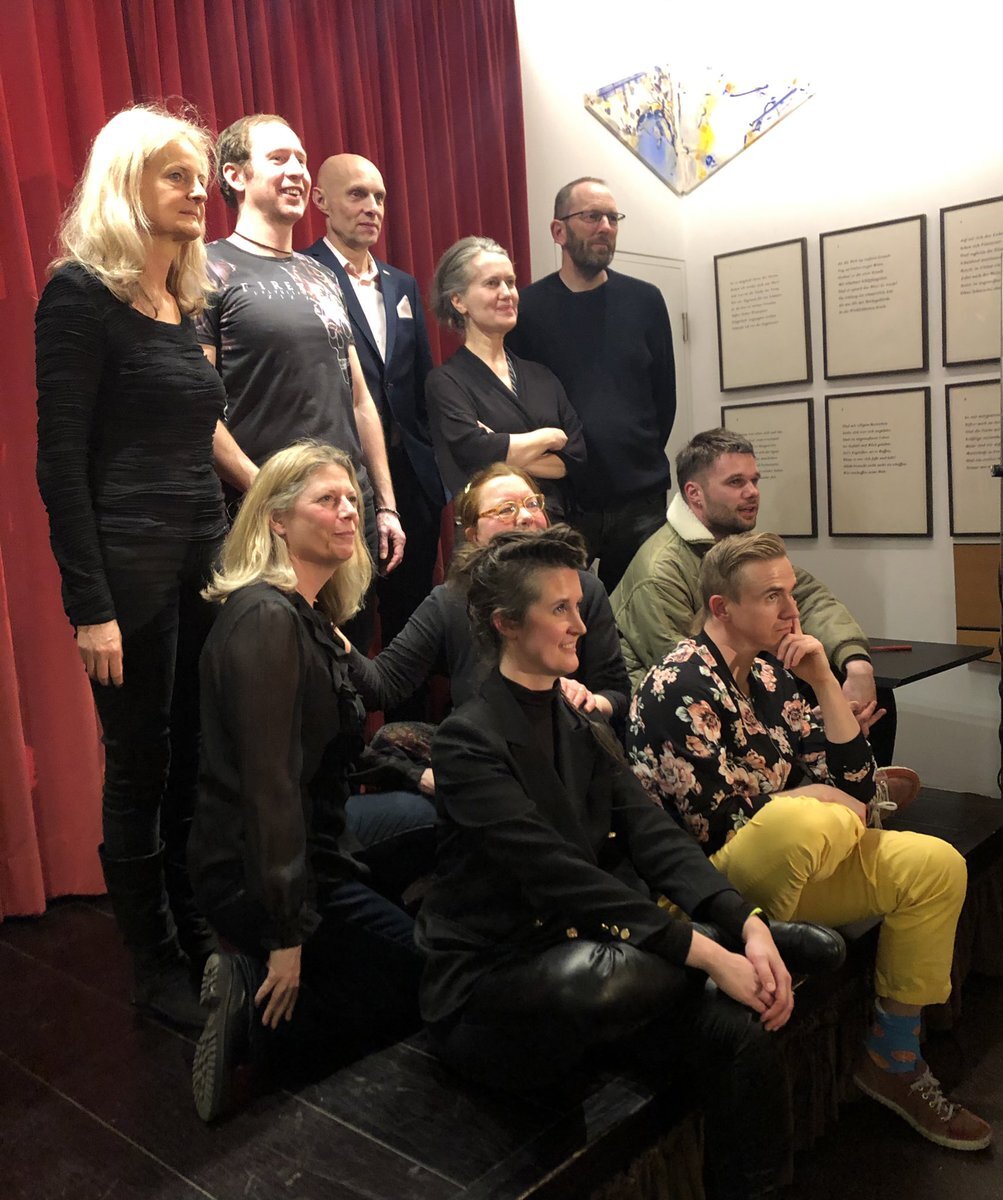
191026_booklaunch_nemeses_sjfowler_lowres_058.jpg

The collaborators are also suitably varied, as might be expected from Fowler’s often unusual pairings for the ‘Enemies’ performances. Fowler works with some elite figures, such as vocal artist Phil Minton, or novelist Iain Sinclair. There are ‘names’, such as Sandeep Parmar and James Byrne, emerging artists like Eley Williams or Ailbhe Darcy, but there are many lesser-known figures here, which suggests Fowler’s generosity, and many European authors, which underlines Fowler’s internationalism (intensified after Brexit), as well as to the non-native speakers’ willingness to risk work in the bastard language of our insular isle, for example, Ausra Kaziliunaite and Robert Prosser. Tom Jenks, Harry Man and Christodoulos Makris are frequent partners for Fowler. Luke Kennard, Camilla Nelson and John Hall are less so. In all, there are 54 collaborators (and I’ve mainly named only writers above), a promiscuous bunch.

I found the book an exhausting but exhilarating read (or ride). One of the delights of creating collaboratively is the opportunity to produce work that could not have been made in any other way, and which is not like work produced individually. Artists here vary in their abilities to ‘let go’ (Sinclair unavoidably sounds like Sinclair) but there is a general willingness to surrender to the encounter (particularly where performance is part of the works’ realisations). In a postface, Fowler quickly passes over the usual reason for collaboration as a concept: collegiate sharing disrupts the loneliness of the long-distance writer. He notes: ‘I have proofed my concept with others, forming transitory but generous communities which have supported the making of challenging and complex work, live, and it has taken me on an extraordinary personal journey.’ He admits, also, perhaps tongue-in-cheek, that the whole endeavour is ‘selfish’: ‘I have somehow mitigated defeat in my other works by constantly working with others … collaborating has left me smug’! Success has been snatched from the jaws of his collaborators. What strikes me as interesting is that there are 54 other poetics of collaboration lurking in this volume, none spelt out coherently like Fowler’s, of course, but each interacting in various ways with his. I want to leave the poetics to one side and plunge into two sample offerings, one a collaboration across media, the other what I call a ‘literary collaboration’.       

‘Beastings with Diamanda Dramm’ ends with a timeline of Fowler’s collaborations with the Dutch violinist and singer. In it, he repeats his ‘smug’ thoughts about collaboration quoted above, and accounts for their four meetings and works. Dramm seems to have set pre-existing poems by Fowler to music, although he says: ‘DD made them better by cutting them up into smaller, newer chunks and singing them’; she characterises this as ‘making a mini opera’. This work is (partly) about a killer chimp, and will be available on CD. What this book contains is three startling delay photographs of Dramm’s performance at the Bimhuis (Fowler is surprised how famous she is in the Netherlands) with Fowler’s visual poems projected against her, a barefoot figure in a long red dress streaked with black or blue forms, vertical tendrils. It also contains a couple of texts, though it is difficult to see where they fit in with the timeline. The second is a long processual piece, ‘A Clever Trick Memorising This You Played’, which begins: ‘your words sound better when my words are put through your words’. This suggests the piece was narrated or sung by Dramm from memory and that it describes its own verbal compositional processes. The lines metamorphose into ‘a word sounds wetter when your words are out of my words’. In the next line, ‘words’ has become ‘worms’. Eventually the text is in different territory altogether: ‘freeing tampon seems bloodier when you are tickling the red loom’. This reader is left wishing he’d been an audience member, a witness to the unfolding processual phrases, sung and set to violin playing.

In reading literary collaboration on the page, the reader often has recourse to a peculiar binary refocusing that feels like a lack of focus. That’s because the flow of the writing is continually interrupted by itself, by the switch between writers. (Imagine two drivers switching at the wheel of a truck, without stopping.) In some cases, where the dialogue is not visible, you stop trying to guess who wrote what. This, I believe, is a sign of success. It hasn’t achieved a third voice (a term which is based on identity of writers not on the identity of writing), but it could be said to leave a linguistic trail coherent enough to regard as a single discourse.

In ‘Sleeping Beauty’ with Prudence Bussey-Chamberlain (from the book House of Mouse) you can see this in action. A Disney film, not the original fairytale, is deconstructed (though deliberately misread might be a more accurate term) by the two writers, interpolating modern idioms as they go, with their ‘slept upon beauty’: …. see full review for text.

There are plenty of other pleasures in this book. SJ Fowler, never smug, despite his self-identification, has extended his own practice, to be sure, with these interactions, but it is difficult not to think that the collaborators also have extended their practices. As you read this book, you feel collaborative potentiality turning to imaginative growth. That’s a rare thing.

   © Robert Sheppard 2020

A note on : European Poetry Festival video-poems

European Poetry Festival 2020 was postponed from April 2020 to October 2020 so I thought it might be cool, in its place, virtually, to have a series of the poets who were to be attending share brand new video poems or kinetic poems or readings / performances to represent themselves in anticipation of the festival to come. Find them all at www.europeanpoetryfestival.com/videopoems

A note on : 3am magazine lockdown blog

https://www.3ammagazine.com/3am/3am-in-lockdown-11-s-j-fowler/

I don’t have a lot to say. I vacillate between sensations and have no strong opinion. It is obvious I am fortunate beyond belief or historical precedence, but I often feel this way anyway. No one, that I’ve seen, in literary terms, has anything interesting to say about it because the lockdown is happening to almost everyone. And those who are ill are best not evoked with stupid writing. Does it matter, as the internet is voluntary, that it all switches between patronising and panicking? I’m worried for some people I know. I’m alive to that and galvanised somewhat. I’m lucky. I cancelled a festival I was organising with over 100 poets who were coming to London from Spain, Italy, all over Europe. Six months dissembled in six days. But I am glad. Two of my family members are NHS or frontline etc… I like how no one has anything interesting to say and as much as I don’t like the articles on how important writing and literature is right now. But that’s just because it’s my job, those articles aren’t meant for me. There is something calming about perspective, for me at least. This is giving me that, though I’d not choose to learn now if I could.

“Another plague year would reconcile all these differences; a close conversing with death, or with diseases that threaten death, would scum off the gall from our tempers, remove the animosities among us, and bring us to see with differing eyes than those which we looked on things with before.”
– Daniel Defoe


c-word youtube comments mashup poem

let’s see what’s going on in good, sophisticated Europe
… takes you to Liverpool

then to a double room in London
a single stays in for twenty days
and goes bananas

one dude eats a bat in China, and suddenly I can’t leave my house
quote of the decade
because we won’t live to see many more quotes

Online advice;
you cannot be anything you want.
love doesn’t get the deal done.
gratitude is the only emotion that taps into a higher intelligence.
material world detaches from the spiritual.
worth comes from character.
the universe rewards authenticity.
adversity reveals character.
the new one who can pull all this off.

within the Diet Apocalypse
Expensive Shit begins to glow
like the food seen
chewing with an open mouth
despising the bbc website

“I’m not a paranoid person”
wears a Rolex in case you need to trade it for a getaway car

Published : Dostoyevsky Wannabe Cities Amsterdam anthology

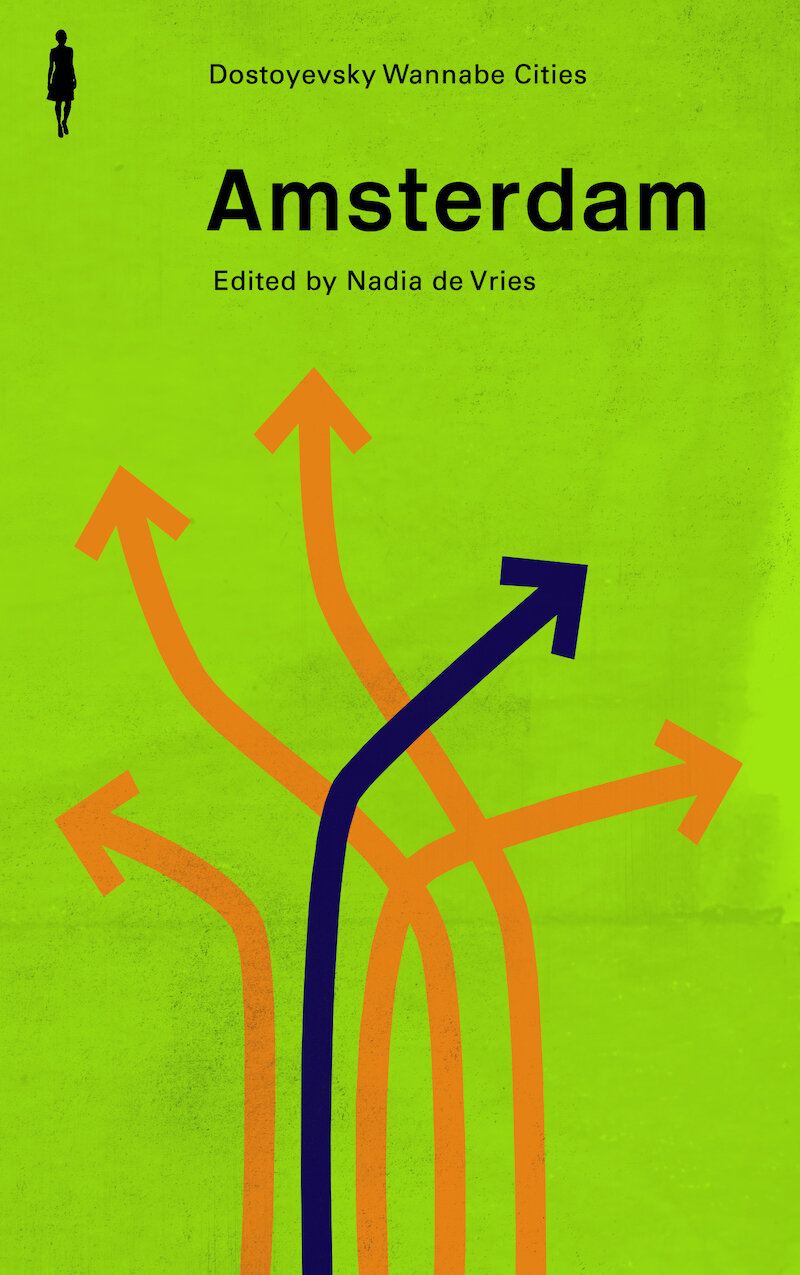
https://www.amazon.co.uk/Amsterdam-Nadia-Vries/dp/1652839097 I’ve got a new short story about me walking around amsterdam with a dead leg after it was leg kicked and some poems also about the city and its inhabitants in a new anthology from Dostoyevsky Wannabe, edited by the brilliant Nadia de Vries. I am in there alongside - Lucia Dove, Helena Grande, Dominic Jaeckle, Christodoulos Makris, Divya Nadkarni. / Nadia is a really great poet and has written a proper good intro to the book too https://www.dostoyevskywannabe.com/cities/cities_amsterdam

European Poetry Festival postponed to October 2020

32695d52-8849-4ea7-9989-0120ff2e990e.jpg

Inevitable and necessary, The European Poetry Festival has been postponed until October 2020. No events will take place in April. The rescheduled festival will present our most ambitious program yet, with poets from across Europe presenting new readings, collaborations performances and publications, in multiple events, from October 6th to 18th. www.europeanpoetryfestival.com/2020

It’s strange that it took me a week to dissemble what took six months to build, plan and programme, but I don’t feel anything but grateful it can happen in October, if it can, because it’s a poetry festival and not important at all. Small thing. Everyone has been proper understanding on the move too, naturally. Well wishes to everyone.

A note on : closing Museum of Futures annual Visual Literature exhibition 2020

futurecrop20.png

A first event cancellation of the new times, the closing event of the 4th annual exhibition of visual literature had to be put off. I wandered down to the museum of futures on the exhibitions last day, after doing my last day teaching at kingston uni, to open for those picking up their work. 3 people came, from 40 or so. I sat in surbiton with friends helping me, Marcia Knight Latter and Katerina Koulouri, at a distance, then alone, for hours. I watched people go by the window, packed up the art and put it into storage. Then I put on a chimp mask and walked down to the thames holding a seagull. Strange times.

I thought maybe id not do another one of these but i think i will. The theme for 2021 will be Concrete Literature. https://www.writerscentrekingston.com/futures

A note on : Sampson Low / Writers Centre Kingston student publication 2020

https://sampsonlow.co/wck-pamphlets/ one of my favourite editorial projects ever - this scheme supports student poet supports at kingston university for their first chapbook. as i edit it it tends to be innovative conceptual work or mini collections. every year the standard is remarkably high, and every year it is a proper pleasure to work with alban low of sampson low, who is extraordinarily generous and supportive as a publisher to me and the young poets. this year - jamie toy, laurensia puia and gabriella buckner have released sea wall, macbett ver 2 and the year of the rat respectively. please support them and sampson low by following the link above and spending 2.60 each. more info https://www.writerscentrekingston.com/sampsonlow

A note on : pictures from Klang Farben Text in Munich

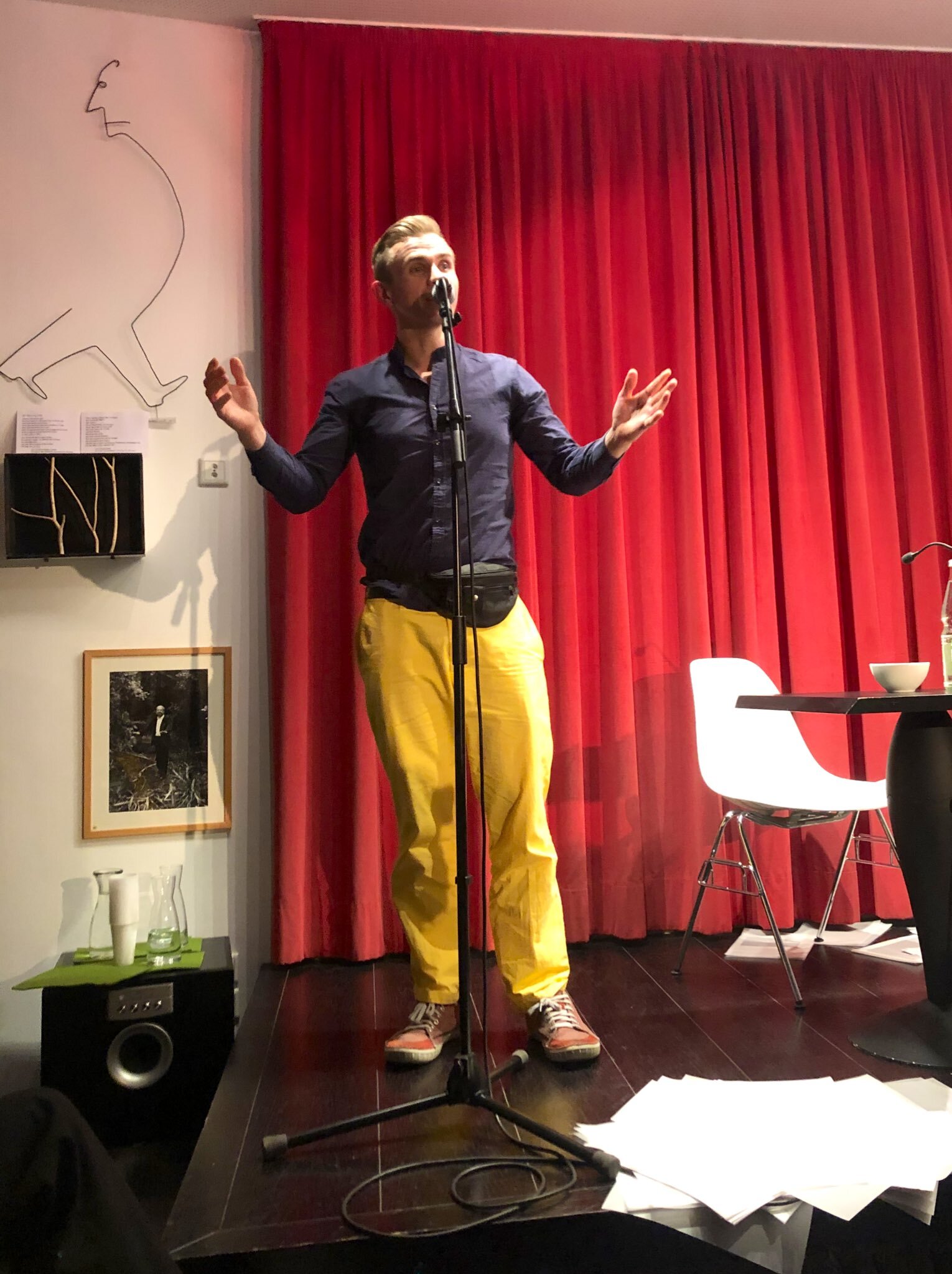
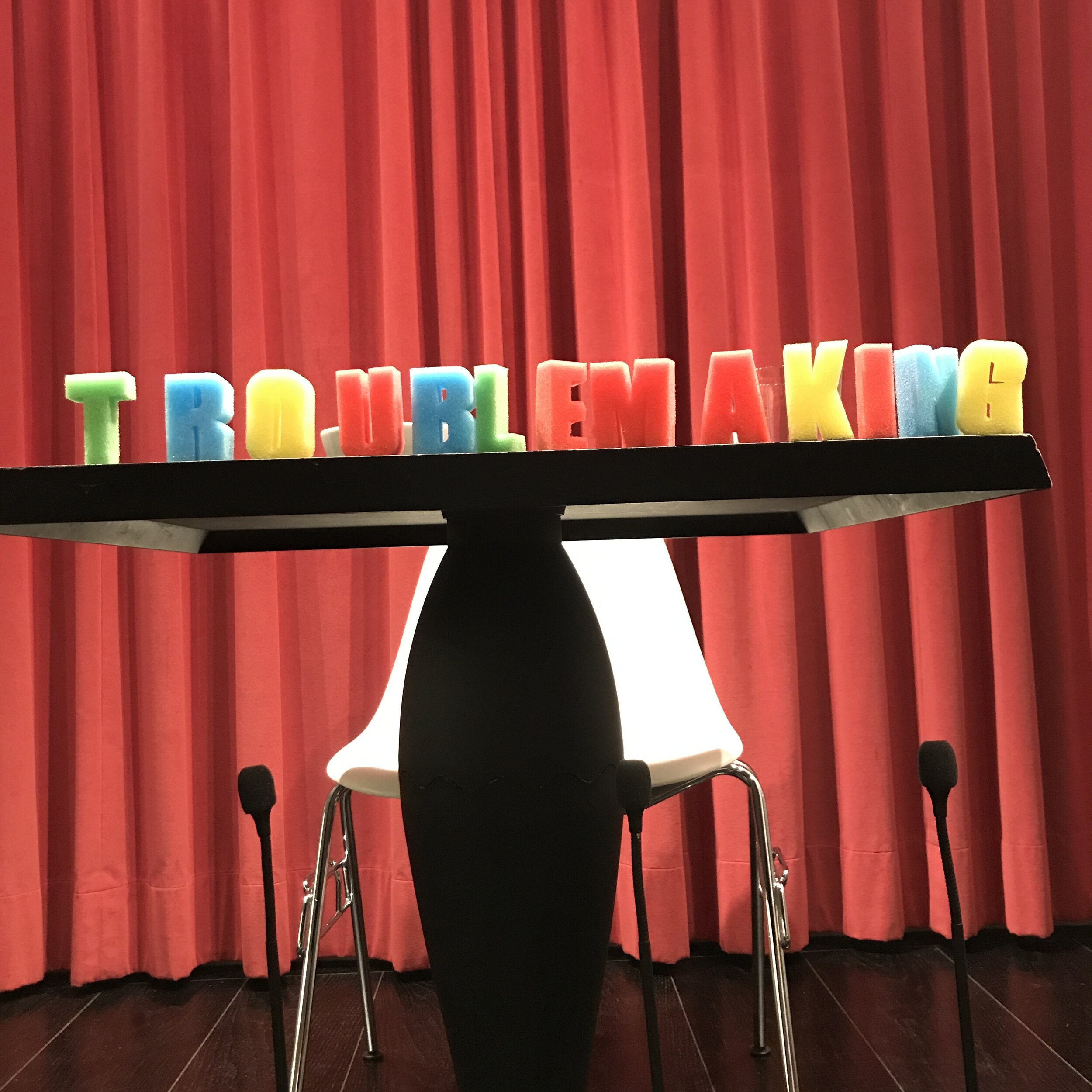
Some juicy pics from www.europeanpoetryfestival.com/klangfarbentext including me making TROUBLEMAKING from sponge, pretending to be a standup, contradicting my last slide, posing naturally in team photos and such.

Published : Traumic Knock, a short story on Queen Mob's Teahouse

Emil Nolde.jpg

Thanks to jessica sequeira on editorial duties, for publishing this new short story o mine about the brain and behaviour and free will maybe https://queenmobs.com/2020/03/fiction-traumic-knock/

“‘I am the thinnest person I know (and that’s saying something, for I am no stranger to sanatoria)’
Franz Kafka

Stephen was not an especially troubled person. He, in his full adulthood, had learned. For example, before entering any supermarket, with money in his bank account, he would stop and say thanks. Same with clean drinking water. Same with modern medicines, dentistry, etc… Pretty good. But he did defend his corner when he felt he was being bullied. And this led to a few rows. With partners, but at work too. That sort of thing. The problem is, trouble, troubledness, is relative. And being in London in the 21st century, he could be described as angry. I mean, had he been almost anywhere else, ever, he could not be described in this way. That is a fact. Because normal people used to be quite angry, it’s just no one could really see it, and certainly not tell others outside of their circle etc . . . Doesn’t matter. The thing is, one day, Stephen got hit in the head. An accident. The details don’t matter. But he didn’t report it to anyone, just dealt with the headaches, and if anything, maybe, forgot he was struck. He went the doctors and they thought he had depression at first. Because Stephen wasn’t as eloquent as he once was. Then one day Stephen feinted and ended up in hospital and they saw the damage in his head. Anyway, you’ve been filled in…….”

A note on : Erdinger

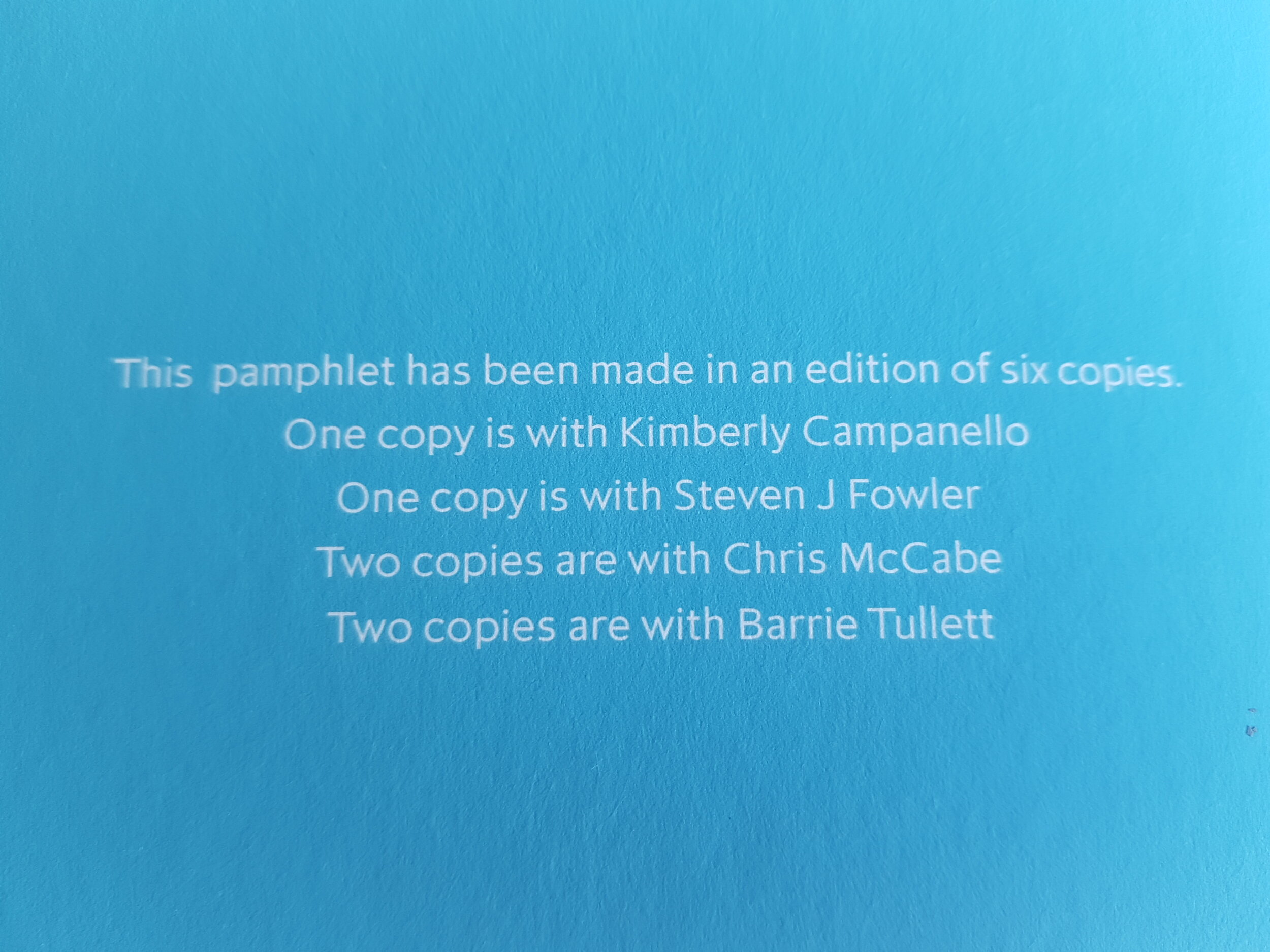
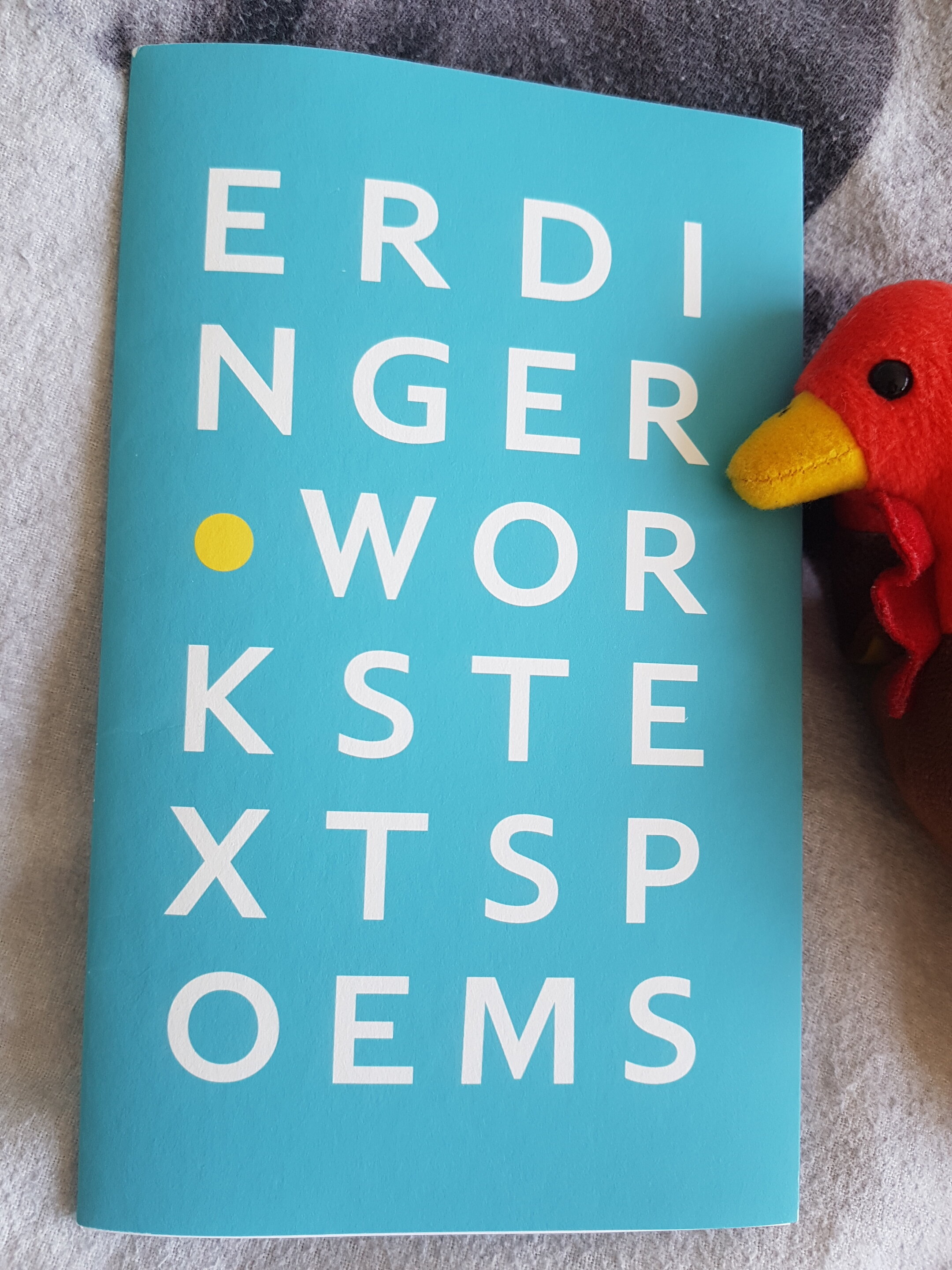
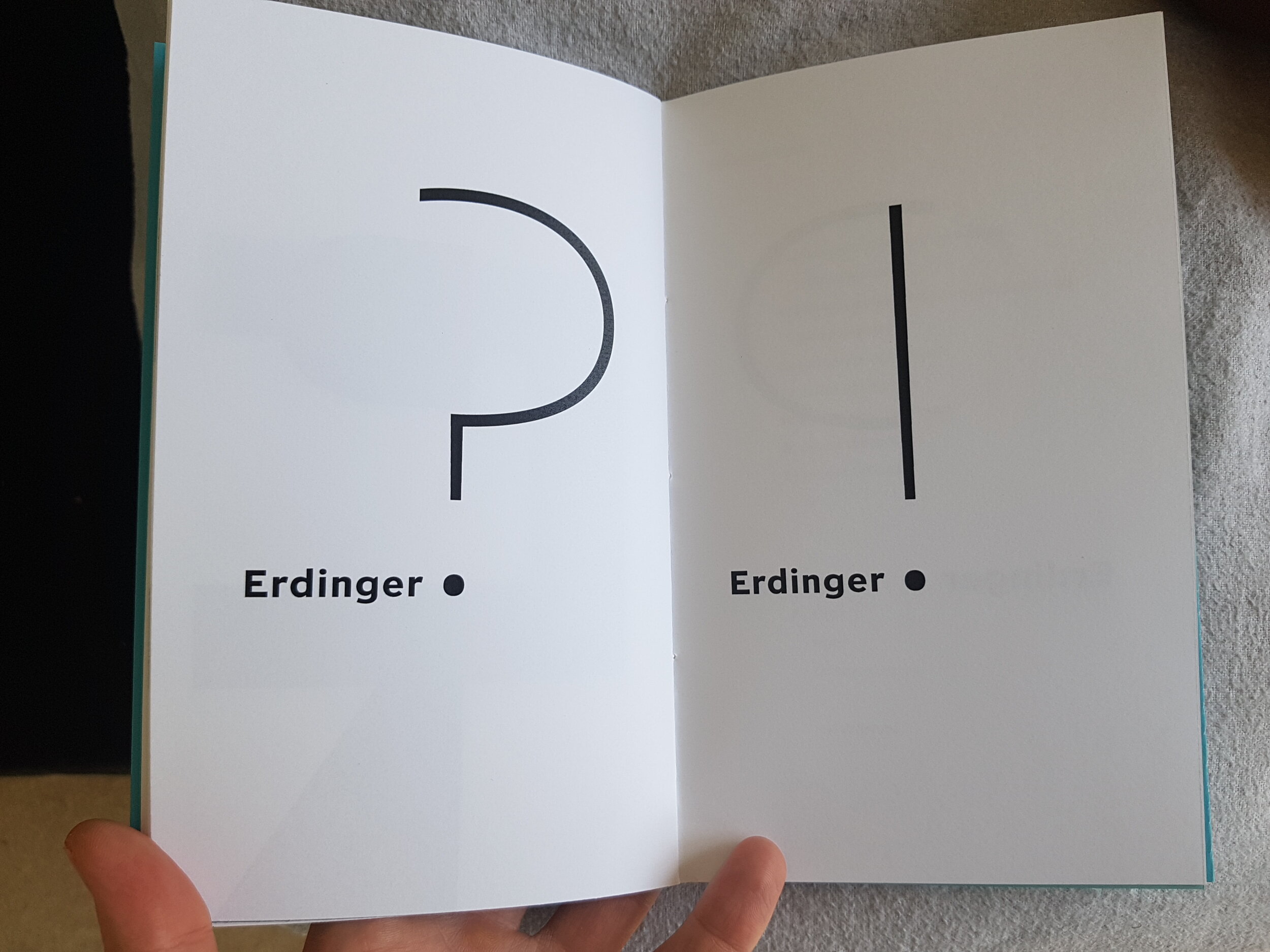
I must admit, before the Klang Farben Text in Munich, and that remarkable project’s constant exchange and collaboration as an active learning experience for me, I had never come across the German sound / concrete poet Raphael Erdinger. It’s thanks to Chris McCabe’s curatorial vision in suggesting we ask the German participants in the project to present on classic concrete poets that this fascinating figure came up. And then over dinner, stories of this anonymous trailblazer so stoked us that it has resulted in a rare reprinting of his work, thanks to Barrie Tullett, in this beautiful limited edition of 6. I have one and you, if you are reading this, cannot have one. But behold

A note on : Klang Farben Text in Munich

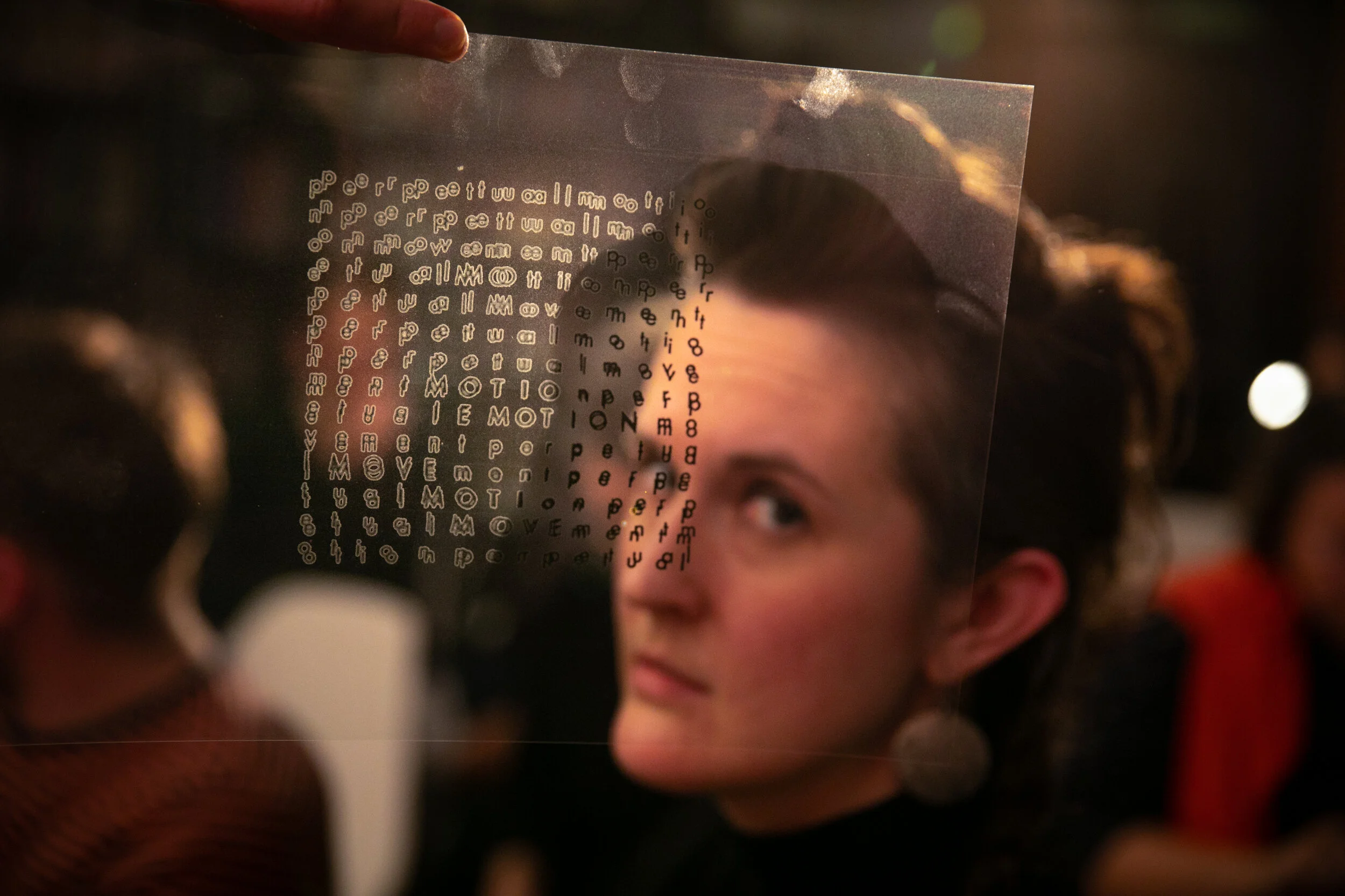
Klang Farben Text was essentially about the visual properties of language as a creative field, and collaboration. It was built in collaboration about collaboration, and the brilliance and professionalism of Elke Ritt, Chris McCabe and Holger Pils ran through the experience as new friendships. I am left with great respect for them, for how we built the project together. Three constant, kind, deeply clever people. And they brought me into the company of Michael Lentz, Lucy Curzon, Pia Leuschner too. The cohort grew, and then reached out to many fine poets, and the very many generous people of Munich who came to watch us work.

The project was no less than 12 poets from two nations for the better part of a week showing and making in Munich. In the gorgeous surroundings of the Lyrik Kabinett, a really remarkable home for us. Working in pairs, making the live, concrete, visual, kinetic. Presenting poetry from the past. Reflecting, actively and variously and insightfully on what we were doing when we worked in the field of concrete or visual poetry. It was a symposium too, as well as the three big evening gigs we did. We ate together, shared long lunches and dinners, talking of more things than I can remember, we exchanged works and books and concepts and methods. We made things together. We were supported as best as we could be throughout. Again, a rare thing.

The opening night was a high energy introduction to each other, rapid solo performances, interventions and interjections. I can impatient and sometimes hard to impress. Everyone was good. Relaxed, authentic, unpretentious, interesting. I did a wee thing with a misdirection intro and then letter sponges. A companion piece to my Lego poem, done for The New Concrete anthology, which created this whole project in a way.

The second night dipped its footing a little to find it, because perhaps it had too but our concept was being tested. I did a powerpoint presentation, played but maybe lost my tone a little, or it didn’t fly in the crowd. It had some funny poetic-jokes though, I think. The collabs began and were considerable – Victoria Bean and Angelika Bean bringing glossolalia and Kim Campanello and Benedikt Kuhn salvaging each other in the dark.

The final night was a triumph and completed our valley. I had the chance to present on Bob Cobbing and his influence on me, alongside a wonderful presentation by Kim Campanello on Paula Claire. Then the collaborations, Robert Montgomery and Gerhild Ebel, burning alphabets in multicolour, Barrie Tullett and Falkner creating new sculpture poetries, Chris McCabe and Michael Lentz crushing the cross-lingual cross method improv and finishing everything with a killer.

Klang Farben Text feels significant in its understatement. Naturally I most often fail and feel dejected as even successes feel fleeting and often unnoticed yet, fundamentally, I’m trying to do things, creatively and curatorially, that haven’t been done before and would not happen otherwise. I need help from others in that. I need to organise with others. Organisation is a word I like, because it operates in a paradox. That the more you can organise context, the freer and more apparently un-organised content can be. Klang Farben Text was a rare thing and a testament to these principles. It was a moment in our professional lives that began friendships and I hope will have a legacy matching its experience.

A note on : Dostoyevsky Wannabe at Writers Centre Kingston

A cool night down in the always cool museum of futures in surbiton. It was the third and final launch of my new book I will show you the life of the mind on prescription drugs and i read alongside my dostoyevsky wannabe bandmates. I gave everyone special pills and asked them to swallow them. They did. They did. We all survived. A lovely audience, some grand performances too https://www.writerscentrekingston.com/#/grandeur/ and such pics from madeleine rose

Published : I will you show...excerpt up on Partisan Hotel

pill.png

https://partisanhotel.co.uk/The-Life-of-the-Mind

Generous of Hotel to share some pieces from my new book with Dostoyevsky Wannabe https://dostoyevskywannabe.com/originals/i_will_show_you_the_life_of_the_mind_on_prescription_drugs

Of course, I must now relate what is inevitable, and describe the object in question. The tiny object that is constantly amused by its matrons and patrons. By its very object it taunts you. Like an unnamed peril surrounding an open palm, about to dart into its centre, like an insect that might be venomous. The white circle ant. The wingless loop moth. A little dead wasp above you and upon you that comes to life just when you were not able to look away and just when you began to feel unwell. It’s a small item, a shape if nothing else, an entity that can affect so much because it is said to be more potent and quieting than the feeling that has brought it into play. It is alleviation and mitigation, you hope. A wee white quell. Am I (is it) being too ambiguous?

A note on : my special course at Kingston University,

ERnxr3sXkAExGpl.jpg

In January 2015 I took over a module on ‘modern’ poetry at Kingston University, when I began teaching there. Now, in February 2020, I’m working with my sixth set of students. The course is without doubt my biggest pedagogical achievement. It’s really honed and specialised, and I change it every year, allow huge room for improvisation. I base it around methods fundamentally. Ways of writing contemporary poetry, tools. I’ll teach constraint writing and do case studies on oulipo. Ideas around conscious / unconscious writing with surrealism. Sound, visual, concrete, performance, video, electronic, kinetic, sculptural poetry etc… Then I try to respond to those who are in the room, lucky as I am to be able to control the numbers and have a dozen or under people involved. I try to open spaces for them to find their own subjects, for the methods to just reveal what is most original and idiosyncratic about their interests and personalities. Then I’m very wary of theory, and talk concepts and ideas and philosophy only when it seems to support the methods / subjects people are naturally bringing. So every year of the six has been so different, but I am proper proud of some of the amazing poets who have come from the course. This picture here shows us doing asemic / pansemic writing techniques in lesson.

A note on : SPAM zine interviews Dostoyevsky Wannabe

tumblr_a53dffd7431755ba86bbc3d8655554af_cd2cf678_1280.jpg

A good interview with Victoria and Richard of Dostoyevsky Wannabe where they mention me new book https://spamzine.co.uk/post/610924993792147456/feature-on-the-first-five-years-of-dostoyevsky

On Future Things

> We are experimenting with the idea of branching out into non-fiction books alongside fiction and poetry (we’re open for non-fiction books mostly on music and design and technology so if anyone has ideas for these then please check our site and send a proposal). The fiction and poetry side will perhaps slow down as a result, but that doesn’t mean that we are not more committed than ever to helping get work out by fiction and poetry writers whose books we like.

> As far as titles are concerned, first up in 2020, we’ve published an anthology in collaboration with Partisan Hotel, also we’ve had Lee Rourke’s Vantablack, SJ Fowler’s I will show you the life of the mind (on prescription drugs), Nadia de Vries’s Dostoyevsky Wannabe Cities Amsterdam anthology

A note on : Launching my new book 'I will show you ...' at Torriano

Dostoyevsky Wannabe publisher celebration tour reading number 2! Launch of my new book launch 2 https://www.amazon.co.uk/Will-Show-Life-prescription-drugs/dp/B0849T1PRK! All the videos are here http://www.theenemiesproject.com/dostoyevskywannabe I read some poems, gravely, then Jessica Sequeira, the famed pianoist, came and played some ancient tunes to my reading. Was a nice quiet night of poets reading to poets in the hallowed shadow of the torriano

A note on : a small poetry-film for Klang Farben Text

Part of the wonderfully ambitious Klang Farben Text program is a temporary exhibition of new kinetic poem / cinepoems / poetry films by all 12 of the participating brit and german poets. Mine is a little engagement with some corporate powtoon

https://www.britishcouncil.de/en/klang-farben-text-visual-poetry-21st-century / https://www.europeanpoetryfestival.com/klangfarbentext

A note on : Launching I WILL SHOW YOU THE LIFE OF THE MIND... with pills and social discomfort

Sometimes you have to use material to hand, and in performing, be careful to allow out the theatrical and histronic, but not necessarily disturbing. But sometimes in doing that, the balance is relative to the audience’s taste, shall we say. I spent the whole performance saying to myself you’re being too nice, keep it calmed. Not sure how it came out. I munched a lot of blue and whites. Read a bit. Sold a few copies of my book, a new book Im quietly happy with but realise again is quite miserable https://www.amazon.co.uk/Will-Show-Life-prescription-drugs/dp/B0849T1PRK

I read alongside 7 dostoyevsky wannabe listmates. All their very good readings are up at http://www.theenemiesproject.com/dostoyevskywannabe